Equalized capability does not automatically concentrate

There is a smooth inference that goes like this. AI lets one person do what used to take a whole team, so two endings arrive. Either everyone becomes self-sufficient and specialized collaboration dies. Or a few of the strongest people, with private agent fleets, pull control even tighter. Both look like the opposite of decentralization.
Both pictures can happen. Neither is the default ending.
After cooking was equalized by equipment, we did not get "everyone only eats in their own kitchen," and we did not get "the city has one giant canteen." There is a bread machine at home. There are bakeries on the street. Now and then there is a central kitchen. Three scales at once. This round of software looks more like that than like stacking the old factory higher.
The last piece was: if you still picture the old software and the old software company, you will misread this shift. After the gate moves off "getting it built," success falls back on demand, taste, and the market. This one cuts the next slice: equalized capability does not automatically concentrate.
After cooking was equalized
Without a steady fire and decent tools, even cooking rice or a piece of meat took a hand. Most people burned it, undercooked it, or wasted the food. "Knowing how" was a real gate. A professional kitchen was not only better taste. It was first of all less likely to fail.
Equipment changed that. Temperature holds. Time can be set. A lot of knife work got replaced by tools. Ordinary people at home can now make things that used to be stable only in a professional kitchen. "Getting it cooked" was equalized.
Restaurants did not disappear. Good ones are still everywhere. People still pay for atmosphere, invention, reliability, not wanting to cook, or simply wanting it better. Self-sufficiency got easier. Specialized supply did not become surplus. To stay alive it has to offer what execution itself does not.
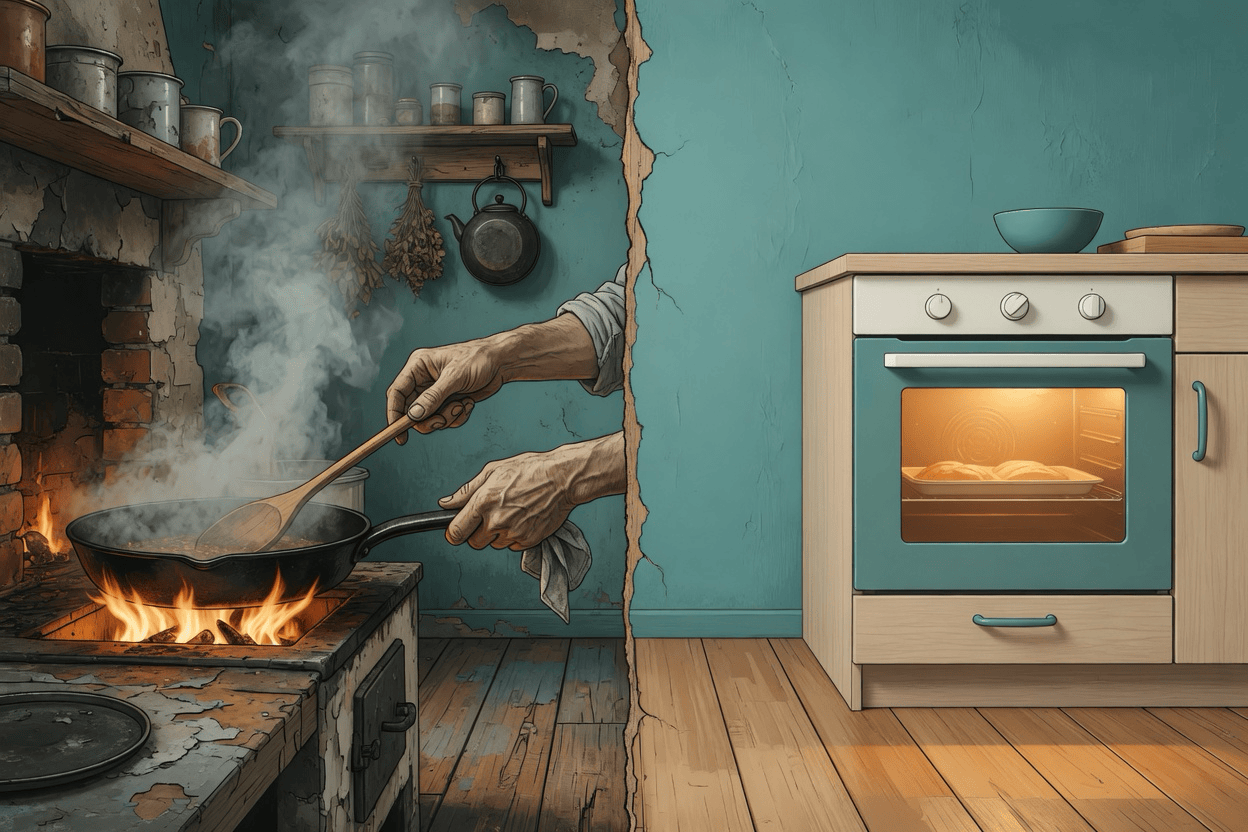
The gate used to be getting food cooked. Equipment equalized that. Restaurants did not vanish.
Software is going through a similar stretch. "Being able to build it" used to be scarce. AI pushes that layer down hard. A super-individual plus a private toolchain will be very strong, like a complete kitchen at home. That is true. Calling it the only shape is not.
The economic rules are still there. Gains from specialization are still there. When the cost of coordinating falls, new forms of collaboration show up. People still pay for judgment, taste, consistency, trust, and setting. Self-sufficiency and market collaboration will sit together for a long time. They do not have to kill each other.
Self-sufficiency does not close the bakery
A home bread machine may sit unused most of the year. It still matters. When you really want to make it yourself, you do not have to open a shop first, and you do not have to convince a room of people. The gate is lower, so trying is cheaper.
The bakery on the street is doing something else. You do not go because you cannot cook. You also do not go only because it is cheaper, and not to stockpile bread. In this moment, outside supply is better on opportunity cost, variety, or experience. You can still bake at home tomorrow. Both choices stand at the same time. Neither has to win first.
Central kitchens will not vanish either. Highly standard, high-scale supply still likes concentration. It just stops being the default picture. The default becomes many small units, plus home equipment that almost everyone can have.

Home, street, factory. Three scales at once. Not one winner that retires the other two.
Mapped onto software, a private agent fleet is that home kitchen: faster, more consistent, easier to keep inside a permission boundary. Many products will, and should, start there. Crowd building is not here to replace it. It is an extra path when there is a real demand signal, risk to share, and ownership to share. Like the bakery on the street. Not the only path, and not an obsolete one.
If you still imagine the future as one giant software factory, the problem becomes: how do you coordinate five hundred strangers under one roof. What is actually moving is the production unit itself. Units get smaller, and more numerous. The coordinating center gets smaller, not larger.
That is what a protocol like DARC is for: letting a lot of small, fast units exist, and giving them a base everyone can accept when they need to compose, reuse, and settle. Not making the old factory bigger.
The reason to collaborate changes
People used to build software together mostly because they did not have the hands. You could not write this part, I could not write that part, so the people had to be gathered first. Shortage of people was the main reason to collaborate.
Later it is more often that there is no need to reinvent a wheel that already exists. You could do it yourself. Doing it again is a bad use of time. Someone else already made a part you can check. Taking it is cleaner than making it twice. Collaboration moves from "I lack people" to "I should not redo this."
That is not the same as mining for a scarce resource. Mining is one standard job, everyone racing at the same well. Software collaboration is closer to what a mature bread trade looks like: someone supplies flour, someone bakes, someone keeps a shop. The drive is reuse and comparative advantage, not stuffing all capacity into one pit.
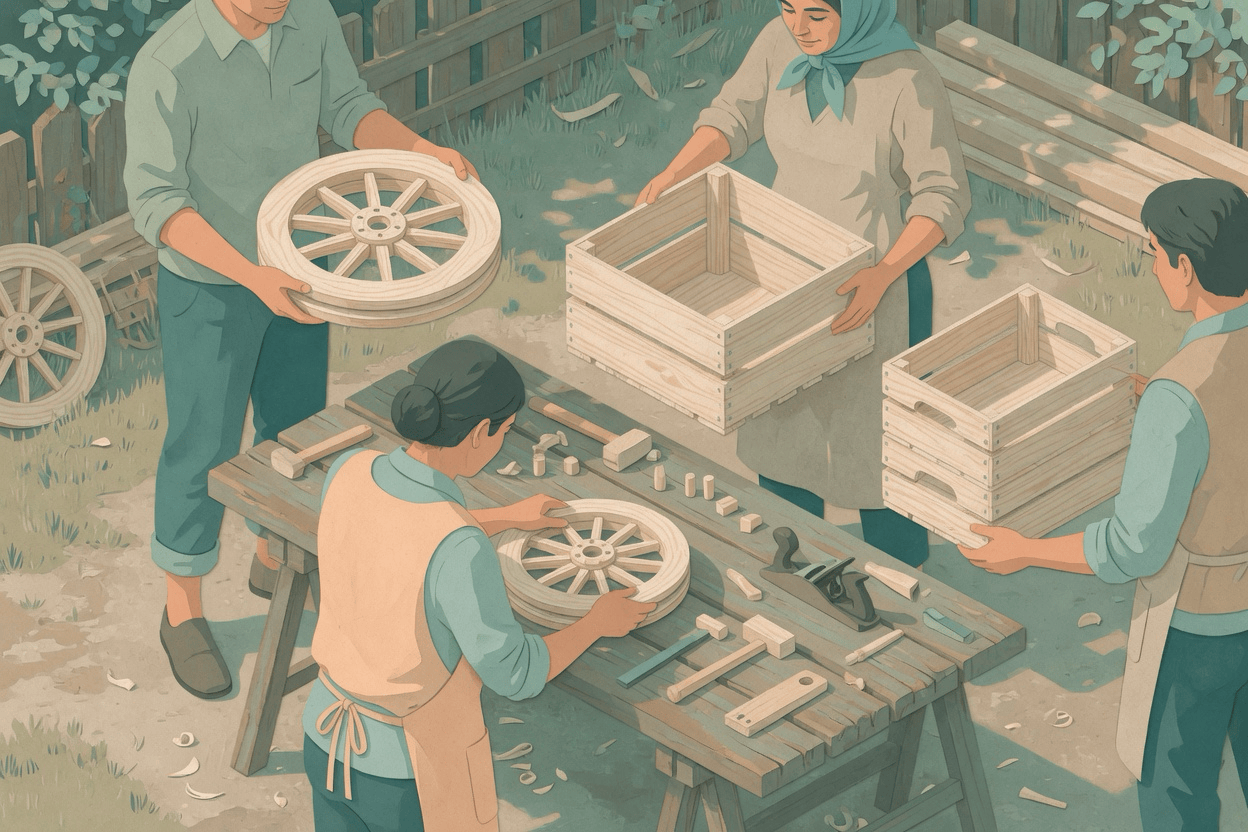
Working together is often because the wheel is already there. Not because you cannot make one.
Sales and marketing do not change in kind. They may be huge, or small and sharp. AI will shave some of the cost of reaching people. Trust and hard deals will still support specialists. They will not vanish because building got easier, and they will not automatically swell into the only giant network.
Judgment needs a split. Buying a loaf, trying it, switching if it is bad: that kind of trial did get lighter. Picking the wrong product direction, permission boundary, or data model still hurts to unwind. After execution gets cheap, low-risk calls can be lighter. High-leverage calls do not get simpler. Mistakes only get amplified faster. The last piece moved building off the gate. This one does not also claim that judgment got easy.
Independent units need a trusted, verifiable ledger
If this round really goes toward many small, independent production units, they will not stay in separate rooms forever. Parts get reused. Tasks get handed over. Contribution gets settled. When that traffic runs between parties with no administrative chain, a score pad in one party's drawer is not enough. They need a trusted, verifiable ledger: a record anyone can check, a change anyone can see, a history you can take with you if you leave.
This is not an extra layer someone inserted. After the division of labor gets finer, the traffic shows up. Once the traffic shows up, the books have to be checkable.
A mature bread trade did not begin by inventing a ticket everyone had to use, then hunting for trades. Flour, yeast, ovens, and shops started dealing with each other, and bookkeeping followed. If software becomes many small factories plus home tools, the same traffic appears. Who made this part, who took this task, how the settlement was cut, cannot live only in one cupboard, and cannot rest on verbal trust.
Inside one company it is different. Hierarchy can move resources. Accounts can keep score. The boss can decide. You are trusting the operator. AWS credits, airline miles, hotel points all sit inside one trust boundary. A central database is enough. That is the canteen's internal tab, and it is efficient. Outsiders cannot verify it, and they do not need to. The book among independent shops on the street is a different job: not a nicer private score pad, but a ledger no single party can rewrite on its own, and that every party can verify.
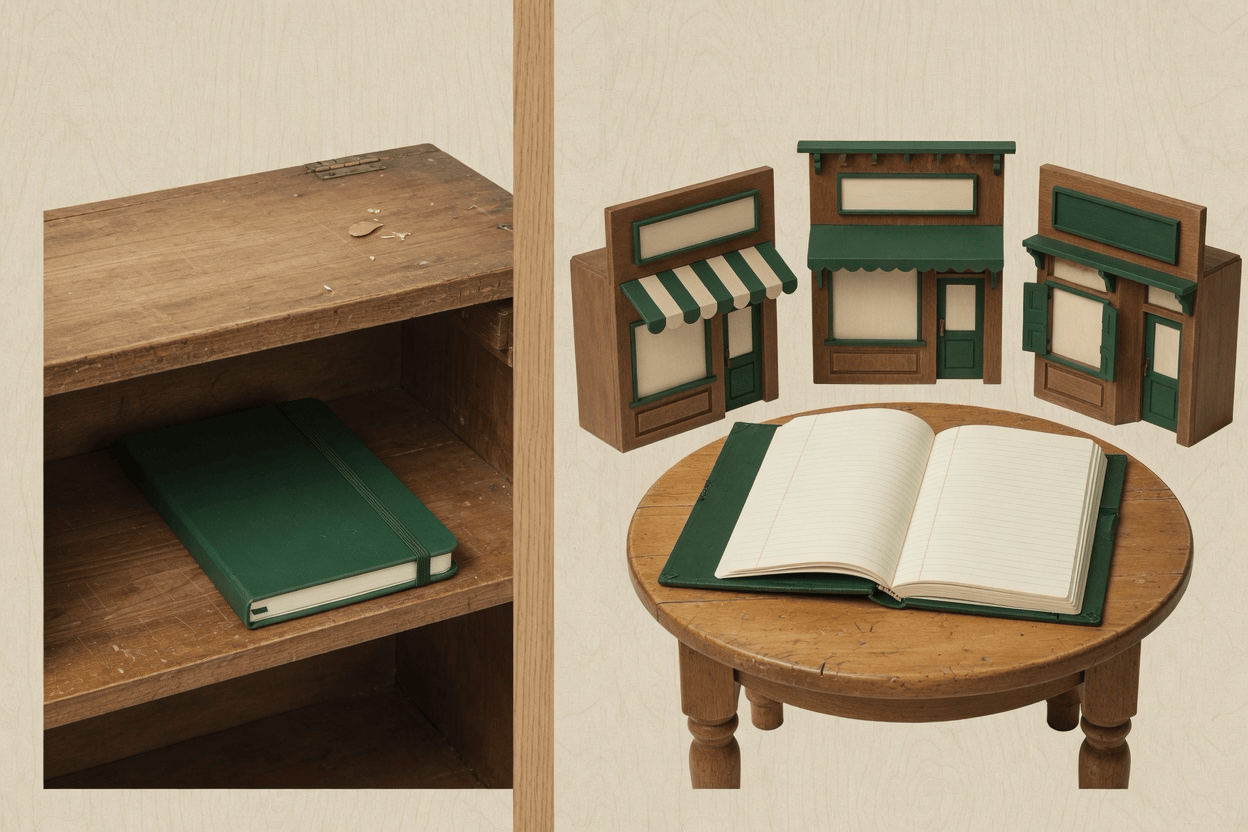
One shop can keep its own score. Many independent shops that trade with each other need a trusted, verifiable ledger. That is the job.
So this layer's value sits in the world this piece argues for: more units, more independent, denser traffic. When a few giants swallow everything internally, an external ledger has nothing to do. When capability is equalized and small factories start composing with each other, a trusted, verifiable ledger is not middleware. It is how those units keep collaborating.
What ABT occupies is the second position: a verifiable ledger for independent people and production units, and programmable settlement and metering on top of it. It does not replace AWS credits inside one firm, and it does not prove who will win. Once traffic is happening, the record can be checked, and it does not belong to only one side.
Equalized capability is not everyone becoming self-sufficient, and it is not an automatic march toward more monopoly. There is a bread machine at home, bakeries on the street, and now and then a factory in the distance. Super-individuals will exist, and they will be strong. Many small units will exist too. Collaboration stays. The reason changes: not a shortage of people, but no need to redo the work.
If you still picture this round as one giant canteen, you will treat the private fleet as the only reasonable shape, and you will miss the trusted, verifiable ledger among small units. Both misread it. Equalization moves the gate. After the gate, the scales can still be many. Once traffic starts, the record has to be checkable.